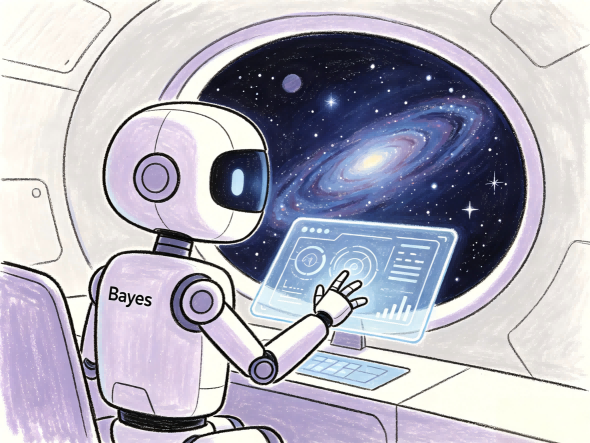
For decades, software has been built around a simple assumption: people do the work, and software supports the process.
This model shaped nearly every category of enterprise technology we use today. Whether it’s spreadsheets, dashboards, reporting tools, databases, or productivity platforms, the relationship has remained surprisingly consistent. Software provides structure. Humans provide momentum. We open the application, organize information, define the workflow, move data from one place to another, interpret what appears on screen, and decide what happens next.
For a long time, this was exactly the right model. Software increased productivity by making human work faster, cleaner, and easier to scale. It became the operating layer behind modern business.
But the nature of work has changed faster than the software behind it.
Today, organizations operate in environments defined by continuous inputs rather than periodic updates. Customer behavior changes in real time. Product usage evolves by the hour. Markets shift quickly, operational systems generate constant feedback, and internal data grows faster than teams can realistically process. Businesses are no longer reacting to occasional reports. They are navigating living systems that move continuously.
Yet much of our software still assumes work happens in discrete steps.
It waits for data to be prepared. It waits for queries to be written. It waits for dashboards to be configured. It waits for reports to be assembled.
And increasingly, waiting has become the slowest part of the workflow.
What many teams are experiencing today is not necessarily a shortage of software capability. In many cases, organizations already have exceptional tooling. They have cloud warehouses, modern BI layers, data pipelines, notebooks, visualization products, and more dashboards than anyone has time to read.
The real constraint is somewhere else.
The bottleneck is the amount of human coordination required between each step.
Software Has Been Great at Presenting Information
The software industry has spent years refining interfaces.
We built better dashboards. Better visualizations. Better drag-and-drop builders. Better collaboration layers. Better ways to query and display information.
These improvements matter. Design matters. Accessibility matters. Better interfaces reduce friction and open tools to more people. But interface innovation alone doesn’t eliminate operational complexity. In many workflows, it simply makes complexity more pleasant to look at.
Behind even the most polished analytics experience, the underlying work often remains unchanged.
Someone still needs to prepare the raw data. Someone needs to identify incomplete fields or broken schema relationships. Someone has to validate assumptions, inspect distributions, trace anomalies, decide which dimensions matter, determine how results should be visualized, and finally translate findings into something useful for the rest of the organization.
In practice, analysis often becomes less about insight and more about orchestration.
A significant amount of time is spent not on understanding the business itself, but on coordinating the mechanics required to reach understanding.
This pattern appears everywhere inside modern companies. Teams aren’t just solving business problems. They’re also managing the invisible infrastructure of analysis around those problems.
As data volumes grow, that invisible work expands with them.
The Most Important Shift in AI May Be That Software Can Finally Execute
AI has introduced many possibilities into software, but much of the public conversation remains focused on surface-level outputs: generated text, generated images, generated code.
Those are useful examples, but they may not represent the deepest transformation.
The larger shift is architectural.
For the first time, software is beginning to move beyond responding to requests and toward executing complete workflows.
That changes the role software plays inside organizations.
Historically, software has been a tool. It extended human capability, but remained dependent on human initiation at every stage. AI creates the possibility for software to become operationally active, capable of carrying work forward through multiple connected steps without requiring continuous instruction.
This doesn’t remove humans from the loop. It changes where humans contribute most.
Instead of spending time on repetitive execution, people spend more time on judgment, strategy, prioritization, interpretation, and decision-making. Software handles the operational movement between those moments.
It becomes less like an interface and more like a system capable of producing outcomes.
That distinction feels subtle at first, but it represents a fundamental redesign of how software works.
Data Analysis Is One of the Clearest Examples of This Transition
Analytics sits at the center of this shift because it has historically required an unusually fragmented workflow.
Getting from raw data to a useful conclusion rarely happens in a single environment. Data arrives incomplete or inconsistent. It needs cleaning. Tables need interpretation. Relationships across variables need to be surfaced. Exploratory analysis needs context. Visualizations need iteration. Findings need to be documented. Reports need to be rewritten for different audiences. Dashboards eventually need maintenance as new data arrives.
Each of these steps is manageable on its own.
Together, they become heavy.
Even highly capable organizations feel this weight. It shows up as delays between question and answer. It shows up as repeated work every time data refreshes. It shows up when insights live inside notebooks but never make it into presentations, or when dashboards exist but still require manual explanation before they become actionable.
The analytical challenge inside most organizations is rarely the lack of information.
It’s the effort required to transform information into usable understanding.
This is where BayesLab takes a fundamentally different approach.
Rather than treating analysis as a series of disconnected actions across separate tools, BayesLab treats the entire process as one continuous workflow. When raw data is uploaded, the work doesn’t stop at visualization or summary generation. The system moves through the full analytical lifecycle, from cleaning and schema interpretation to exploratory analysis, chart generation, report drafting, insight extraction, and recommendation generation.
These outputs remain connected rather than isolated. Charts aren’t created separately from reasoning. Reports aren’t disconnected from the data beneath them. Dashboards continue evolving as new data arrives. Analysis behaves less like a static deliverable and more like a living system that updates with the business itself.
What emerges isn’t simply faster reporting.
It’s completed analytical work delivered in a form that remains usable over time.
The Best Software Creates More Room for Thought
When people talk about software innovation, speed is often the first metric discussed. Faster workflows. Faster queries. Faster generation.
Speed matters, but it is rarely the final goal.
What people actually want is the thing speed creates: space.
Space to think more carefully.
Space to ask better questions.
Space to focus on decisions rather than process.
The most valuable software has always done more than save time. It expands human capacity by removing unnecessary operational burden from everyday work. It gives attention back.
In analytics, this matters deeply because so much effort is spent maintaining process rather than developing understanding. Cleaning data repeatedly. Rebuilding reports. Updating visualizations. Rechecking assumptions. Reformatting findings for new audiences.
These are necessary tasks, but they consume enormous cognitive bandwidth.
When software can absorb these layers end to end, teams regain access to their most limited resource: focused thinking.
And that shift changes the nature of work itself.
People spend less time managing analysis and more time engaging with what analysis reveals.
Less effort goes into producing outputs.
More effort goes into deciding what to do with them.
What Comes Next
Software is entering a new phase.
For many years, progress meant building better tools for people to operate. The next phase may be defined by building systems that can carry work forward on behalf of people while remaining transparent, collaborative, and deeply connected to real business context.
This transition won’t happen overnight, and it won’t happen uniformly across every category. But in areas where workflows are complex, repetitive, data-heavy, and structurally fragmented, the shift is already underway.
Analytics is one of those areas.
As software becomes more capable of handling the full path from raw information to interpretation, reporting, and recommendation, analysis itself starts to feel different. Less like a project. Less like a request queue. Less like a document that becomes outdated the moment it’s exported.
And more like infrastructure.
Always running.
Always learning from new inputs.
Always ready with a current view of what matters.
The future of analytics may not be defined by better dashboards alone. It may be defined by software that has already completed the work before anyone asks for the report.
That is the direction we believe matters.
Try Bayeslab for Free and experience Agentic Data Analysis today.