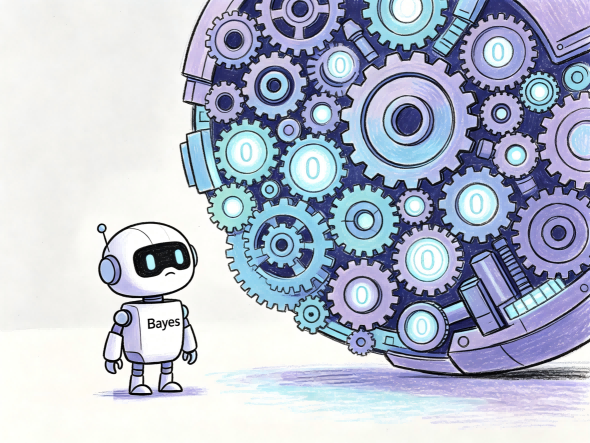
In most organizations, analysis is still understood as something that begins with a question and ends with a chart. Yet if you observe how decisions are actually made, a different pattern emerges. The visible output of analysis, whether a dashboard, a report, or a slide, is only the final compression of a much longer process that rarely gets acknowledged as part of the analytical system itself.
Before any insight is formed, data must first be reconciled across systems that were never designed to align. Definitions drift between teams, metrics evolve over time without coordination, and seemingly simple concepts such as “revenue,” “active user,” or “retention” often contain subtle variations depending on context. This fragmentation is not an exception; it is the default state of most data environments. As a result, a significant portion of analytical effort is spent not on reasoning about the business, but on restoring consistency in the underlying substrate.
Once this alignment is achieved, the work transitions into what is commonly referred to as analysis, though in practice it is closer to structured exploration under uncertainty. Analysts move between levels of abstraction, testing hypotheses, slicing dimensions, validating anomalies, and revisiting assumptions as new patterns emerge. Importantly, this process is rarely linear. Each step reshapes the next, and the path from question to conclusion is often reconstructed in real time as the investigation unfolds.
What appears externally as a clean narrative is in reality a continuous negotiation between data quality, interpretability, and business relevance. By the time findings are presented, much of this negotiation has already been removed, leaving behind a simplified representation that is optimized for communication rather than fidelity.
This separation between the analytical process and its final representation has become so deeply embedded in modern workflows that it is rarely questioned. Reports are expected to be static artifacts. Dashboards are expected to reflect snapshots. Even “real-time” systems are typically real-time only at the level of data ingestion, not at the level of reasoning.
As organizations scale, this model introduces a structural inefficiency. The same reasoning is repeatedly reconstructed across teams, time periods, and business contexts. A monthly business review is not a continuation of the previous one, but a re-execution of a similar investigative process with updated inputs. Over time, this leads to an accumulation of duplicated cognitive work that is largely invisible but increasingly expensive.
The paradox is that while data systems have become more continuous, analytical thinking has remained episodic.
The Limitation Is Not Access, but Reproduction
Much of the progress in modern data infrastructure has focused on reducing the friction of access. Queries are faster, storage is cheaper, pipelines are more reliable, and visualization tools are more flexible. Yet these improvements primarily optimize the retrieval and presentation layers of analytics rather than the structure of analytical work itself.
The core challenge lies elsewhere. It is not difficult to access data. It is difficult to reproduce understanding.
Understanding is not a static output; it is a constructed object that depends on a sequence of decisions, assumptions, and intermediate transformations. Two analyses performed on the same dataset can lead to entirely different conclusions depending on how the problem is framed, which dimensions are prioritized, and how anomalies are interpreted. This makes analytical work inherently sensitive to context and difficult to reuse in a systematic way.
As a result, organizations tend to optimize for outputs rather than processes. Reports are stored, dashboards are shared, and presentations are archived, but the reasoning that produced them is rarely preserved in a form that can be executed again. The system remembers what was concluded, but not how the conclusion was reached.
This is where inefficiency accumulates over time. Not in the generation of insights, but in their repeated reconstruction.
When Analysis Stops Being a Sequence of Steps
A more useful way to understand analysis is to treat it not as a pipeline of discrete actions, but as a repeatable transformation applied to evolving data. The structure of this transformation is surprisingly stable across domains. Whether the context is product analytics, financial reporting, or operational monitoring, the underlying pattern remains consistent: identify change, localize its source, evaluate potential explanations, and determine actionable implications.
What varies is not the structure, but the data it operates on.
Despite this stability, most analytical systems do not treat analysis as something that can be executed as a whole. Instead, they expose individual components: query engines for retrieval, notebooks for exploration, visualization tools for representation, and documentation tools for communication. The burden of connecting these components remains with the human analyst.
This fragmentation reflects historical constraints rather than conceptual necessity. It assumes that the orchestration of analytical reasoning must remain manual because the system cannot maintain coherence across steps. However, this assumption becomes less valid as systems gain the ability to retain context, track transformations, and operate over multi-step objectives.
Once this orchestration layer becomes machine-executable, analysis can shift from being a sequence of manually coordinated tasks to a unified process that runs end-to-end.
At that point, the primary question is no longer how to perform each step more efficiently, but how to define the analytical process itself as a reusable object.
BayesLab and the Recomposition of Analytical Work
BayesLab was designed around this shift in perspective. Instead of treating analytics as a collection of tools that assist humans in constructing insights, it treats analytics as a system that can execute the construction of insights as a complete workflow.
In practice, users begin not with dashboards or query languages, but with raw data and a loosely defined business objective. The system then takes responsibility for structuring the investigation: reconciling inconsistent data, identifying relevant dimensions, exploring distributions, detecting anomalies, testing plausible explanations, and assembling findings into a coherent analytical narrative.
What is produced is not a single artifact, but a structured representation of the entire analytical process. This includes both the final outputs and the intermediate reasoning that led to them, allowing the work to be inspected, validated, and, most importantly, re-executed.
This re-executability is the critical distinction. When new data arrives, the analysis does not need to be reconstructed. The same investigative structure can be applied again, preserving methodological continuity while updating the underlying facts. Over time, this changes the nature of reporting from static documentation into an evolving system of reasoning that remains aligned with the state of the business.
The implication is subtle but significant: analytical work stops being something that is produced and instead becomes something that is maintained.
Toward Continuous Analytical Systems
As organizations become increasingly data-rich, the constraint shifts from information availability to interpretive capacity. The challenge is no longer how to collect or store data, but how to consistently transform it into reliable understanding at the pace at which the business itself evolves.
In such an environment, the advantage does not come from producing more reports or building more dashboards. It comes from reducing the cost of maintaining analytical coherence over time.
Systems that can preserve reasoning, not just results, begin to change the economics of decision-making. They allow analysis to persist across time, adapt to new information, and remain structurally consistent even as underlying data changes.
This is the direction we are exploring with BayesLab. Not as a tool for generating faster outputs, but as a system for maintaining analytical continuity in environments where data never stops changing.
Try Bayeslab for Free and experience Agentic Data Analysis today.